Two years into the barn owl monitoring project: First Results
Barn Owls ecology is monitored in western Switzerland through low-cost Smart Nestbox devices. After two years of operation with 40 prototypes and 1000 tagged owls, the first results reveal remarkable activity — one owl detected over 20,000 times at a single entrance.
Barn Owls (Tyto alba) ecology is monitored in western Switzerland by putting up artificial nest boxes, which harbor almost all breeding individuals. When the owls nest, a wide range of physiological, physical or behavioral parameters can be measured in the adults or the chicks. However, to obtain these data, researchers often have to catch the owls, thus inducing a light stress. The idea of this project was to monitor the movements of all the individuals all year round through a low-cost device, without any disturbance to the owls.
Why monitor and how?
The movements of individuals can already be studied by putting a GPS on the owls. However, these devices are very costly, which limits the number of individuals studied. Moreover, the device is energy-greedy and can only record for a few days. Then, the owl has to be caught again to obtain the data.
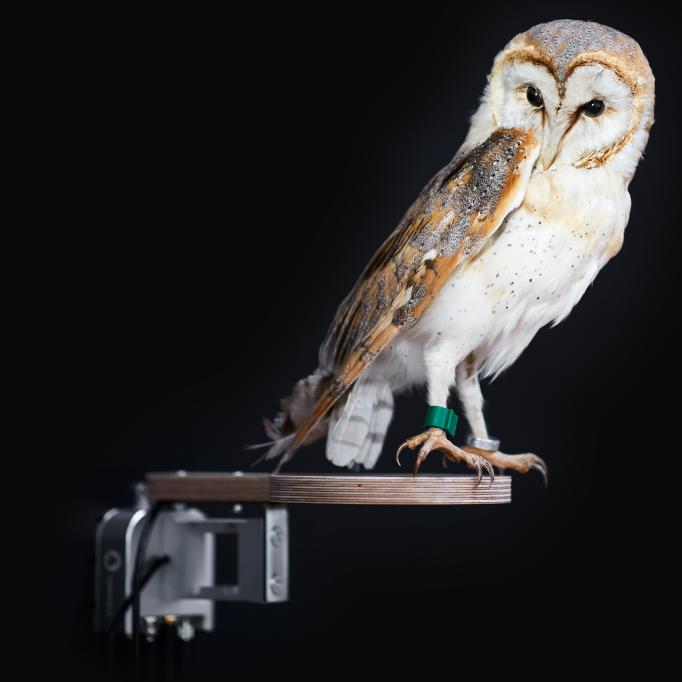
In order to overcome these challenges, this project aims to produce a large number of low-cost devices that could be put on every nest box in the study area (about 400) to record the visits of tagged individuals (using a low-cost, passive RFID bird ring). In addition to this, a weight sensor allows to log the weight variation of any identified bird that visits the Smart Nestbox. All of this is embedded in the wooden perch installed in front of the nestbox entrance.
The researchers can now obtain information about the pre-breeding behavior of the owls, the use of the nestboxes by breeding or non-breeding individuals during the year, the dispersion behavior of the chicks, or the social interactions of individuals around the breeding sites. The results of those analyses are expressed in term of habitat use, predation behavior, home range, in the broad area of animal movement ecology.
Preliminary results
As part of a test run, 40 Smart Nestbox prototypes have been installed in western Switzerland and about 1000 owls have been tagged with an RFID plastic ring. These devices have now been operational for almost two years.
Related solution
Anisca Bird — Smart Bird Scale
Automated bird weighing and RFID identification system. Developed with the Swiss Ornithological Institute for stress-free wildlife monitoring year-round.
Learn more